
Air Filters, K&N air filter
Do Performance Air Filters Actually Work? K&N vs. Standard Paper Filters
Oct
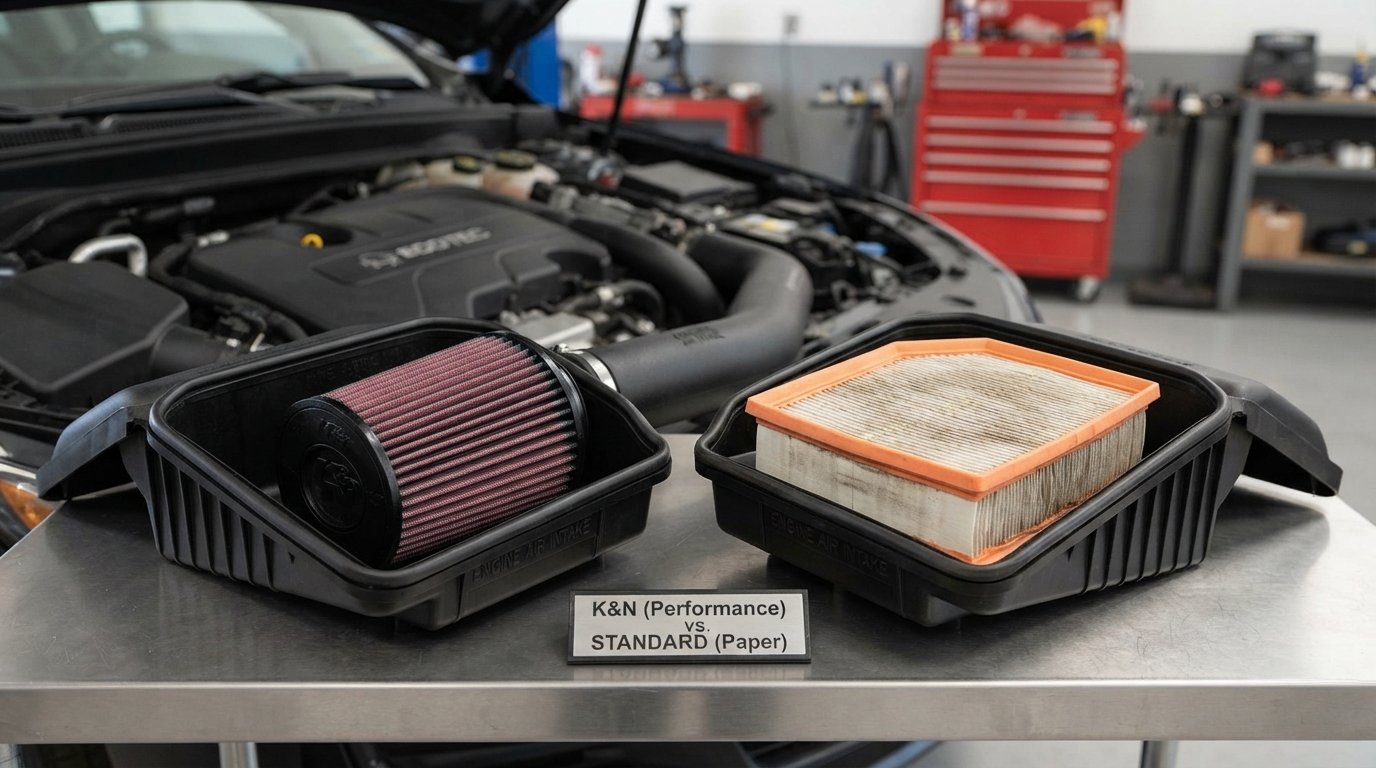
High-flow drop-in performance air filters (like a K&N oiled cotton gauze element) generally adds between 1 and 4 horsepower at wide-open throttle on modern engines, but it will not noticeably increase fuel economy or transform daily street performance. Modern engine control units (ECUs) automatically adjust fuel delivery based on airflow sensors, neutralizing passive mileage gains. Standard paper filters (like STP) offer higher initial dust filtration efficiency at a lower upfront cost, while washable filters deliver long-term savings for high-mileage drivers who commit to proper cleaning and re-oiling.
Table of Contents
How Air Filters Work: Cotton Gauze vs. Pleated Paper
Engine air filters prevent airborne dirt, road dust, and debris from entering your engine’s combustion chambers while maintaining sufficient airflow. The two most common designs achieve this balance using completely different mechanical approaches:
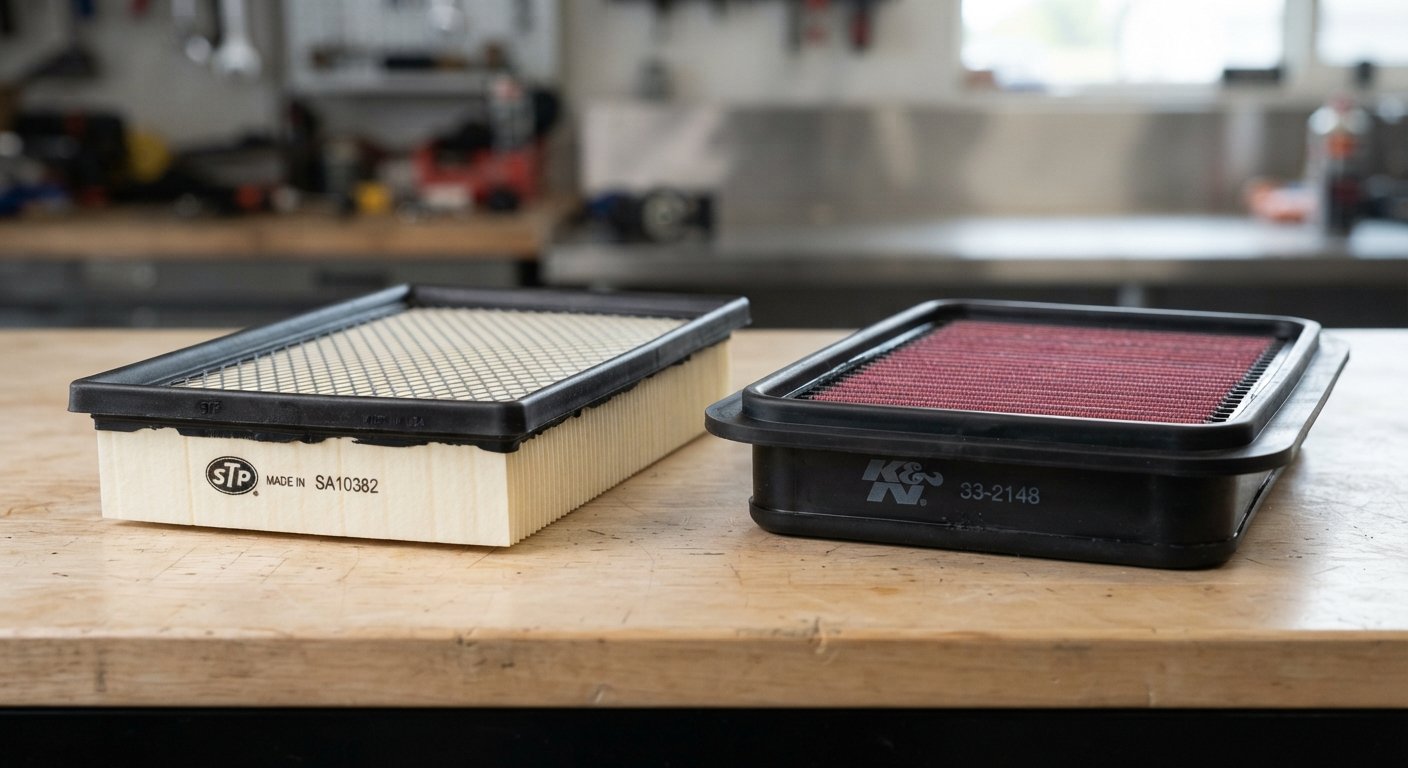
- Pleated Cellulose Paper (e.g., STP Standard Filters): Standard replacement filters rely on compressed synthetic or wood-pulp fibers. Air forces its way through tiny microscopic pores in the paper. As dust accumulates, these tiny passages gradually plug up, reducing total airflow over time until the filter is replaced.
- Oiled Cotton Gauze (e.g., K&N Drop-in Filters): Performance filters feature multiple layers of woven cotton fabric sandwiched between wire mesh screens and treated with a specialized tacking oil. Instead of blocking dust purely through pore size, airborne particles cling to the sticky oil droplets on the cotton strands. This allows the weave to remain open, allowing more cubic feet per minute (CFM) of air to pass through.
The Horsepower & MPG Reality Check: What the Tests Show
Horsepower Claims
K&N states that its replacement drop-in filters are engineered to increase airflow and can deliver minor power increases—typically up to 4 horsepower depending on the application. Dyno testing across independent automotive labs consistently shows that replacing a clean stock paper filter with a drop-in high-flow cotton filter yields 1 to 4 peak horsepower on a stock engine at wide-open throttle (WOT). On a 300-horsepower truck engine, this slight increase occurs at high engine RPMs and is virtually imperceptible in daily city or highway driving.
Fuel Economy (MPG)
A widespread myth suggests that a dirty or restrictive air filter significantly reduces fuel economy in modern cars. In reality, testing by the U.S. Department of Energy (DOE) on modern fuel-injected vehicles demonstrated that restricted air filters do not drop fuel economy. The ECU senses reduced airflow via the Mass Air Flow (MAF) sensor and automatically throttles back fuel injection to maintain the target air-fuel ratio. A high-flow filter will not boost your miles per gallon; it simply reduces restriction when the engine is breathing at full throttle.
Filtration Efficiency: Dust Protection vs. High Airflow
Every filter design involves a trade-off between airflow restriction and dust-trapping capability:
- Standard Paper Filtration: Independent laboratory testing under ISO 5011 standards shows high-quality cellulose paper filters (like STP) typically achieve a 99%+ initial dust filtration efficiency rating. They excel at capturing fine silica dust particles (5 to 10 microns) right out of the box.
- Cotton Gauze Filtration: Oiled cotton gauze filters typically test between 96% and 98% initial filtration efficiency under ISO 5011 testing. As dirt builds up on the oiled fibers, a boundary layer forms that actually improves its filtering ability over time, but initial fine-dust pass-through is slightly higher than pristine paper.
For daily highway commuting and general driving, both filter types protect engine internals effectively. However, if you regularly haul loads through severe dust, dirt logging roads, or agricultural conditions, a high-efficiency paper filter like an STP element provides superior protection for delicate intake tracks.
Browse direct-fit replacement engine air filtersfor your vehicle at SparePartPlug.
MAF Sensors & Maintenance: Preventing the Over-Oiling Trap
A common concern with reusable performance filters is Mass Air Flow (MAF) sensor failure.
The Truth About MAF Contamination
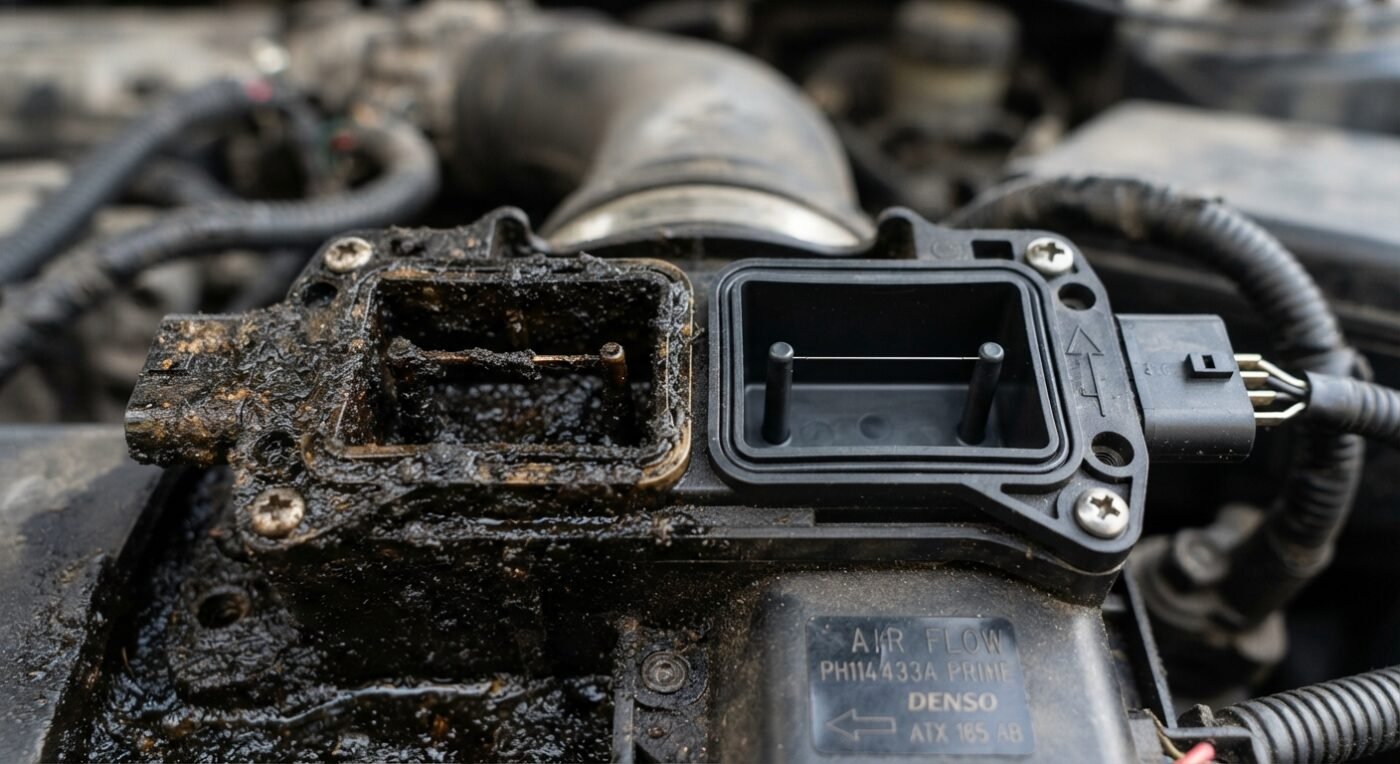
K&N’s internal testing reports that filter oil does not migrate off a properly oiled filter element into the air stream, even under high CFM vacuum conditions. However, in shop service bays, MAF sensor contamination issues (triggering diagnostic trouble codes P0171/P0174 for lean air-fuel running) almost always stem from excessive re-oiling during routine washing.
When a DIYer drenches a cleaned filter in red recharge oil without letting it fully wick into the cotton or wiping off the excess, liquid oil drops are pulled down the intake tube. This oil coats the hot wire inside the MAF sensor, trapping fine dust and insulating the sensor element, leading to inaccurate air readings and sluggish throttle response.
Proper Washing and Care Rules
- Never Use High-Pressure Compressed Air: Blowing compressed air through a cotton filter tears the fine woven fibers, blowing wide holes in the media and permanently ruining filtration.
- Wash Gently: Spray an approved cleaner, let it soak, and rinse with low-pressure tap water from the clean side outward. Air-dry completely before applying oil.
- Oil Lightly: Apply oil sparingly along the crown of each pleat. Let the filter sit for 20 minutes so the oil wicks evenly across the grey cotton until it turns a uniform light red. Touch up only pale spots.
Cost Breakdown: Washable High-Flow vs. Standard Disposable
To determine if a performance filter is worth the investment, calculate your long-term ownership costs:
| Feature | K&N Reusable Cotton | STP Standard Paper |
| Filter Construction | Multi-layer oiled cotton gauze | Pleated cellulose paper |
| Average Initial Cost | $63.00 – $82.00 | $14.00 – $22.00 |
| Service Life | Reusable up to 50,000 miles between washings | Replace every 12,000 to 15,000 miles |
| Maintenance Kit Cost | ~$15.00 (cleaning solution & oil spray) | None (dispose and replace) |
| Airflow CFM | Higher maximum airflow | Standard OEM specification |
| Filtration Efficiency | ~96% – 98% (ISO 5011) | ~99%+ (ISO 5011) |
| Direct Product Examples | K&N 33-2023 ($63–$68) K&N E-1570 ($78–$82) K&N 33-2298 ($64) K&N E-0940 ($78) | STP SA90140 ($17) STP SA3637 ($14–$18) STP SA5058 ($15–$19) STP PSA8243 ($18–$22) |
The Break-Even Calculation
If an STP paper filter costs $18 and is replaced every 15,000 miles, you will spend $72 on paper filters over 60,000 miles. A K&N filter costing $65 plus a $15 cleaning kit totals $80 over that same distance. The washable filter begins saving money after roughly 60,000 to 75,000 miles of vehicle ownership.
Engine Air vs. Cabin Air: Don’t Confuse the Two
Vehicle owners frequently confuse engine air filters with interior HVAC cabin air filters. They perform entirely different roles:
- Engine Air Filters: Positioned under the hood inside the airbox. Their sole job is keeping dirt out of the engine intake system.
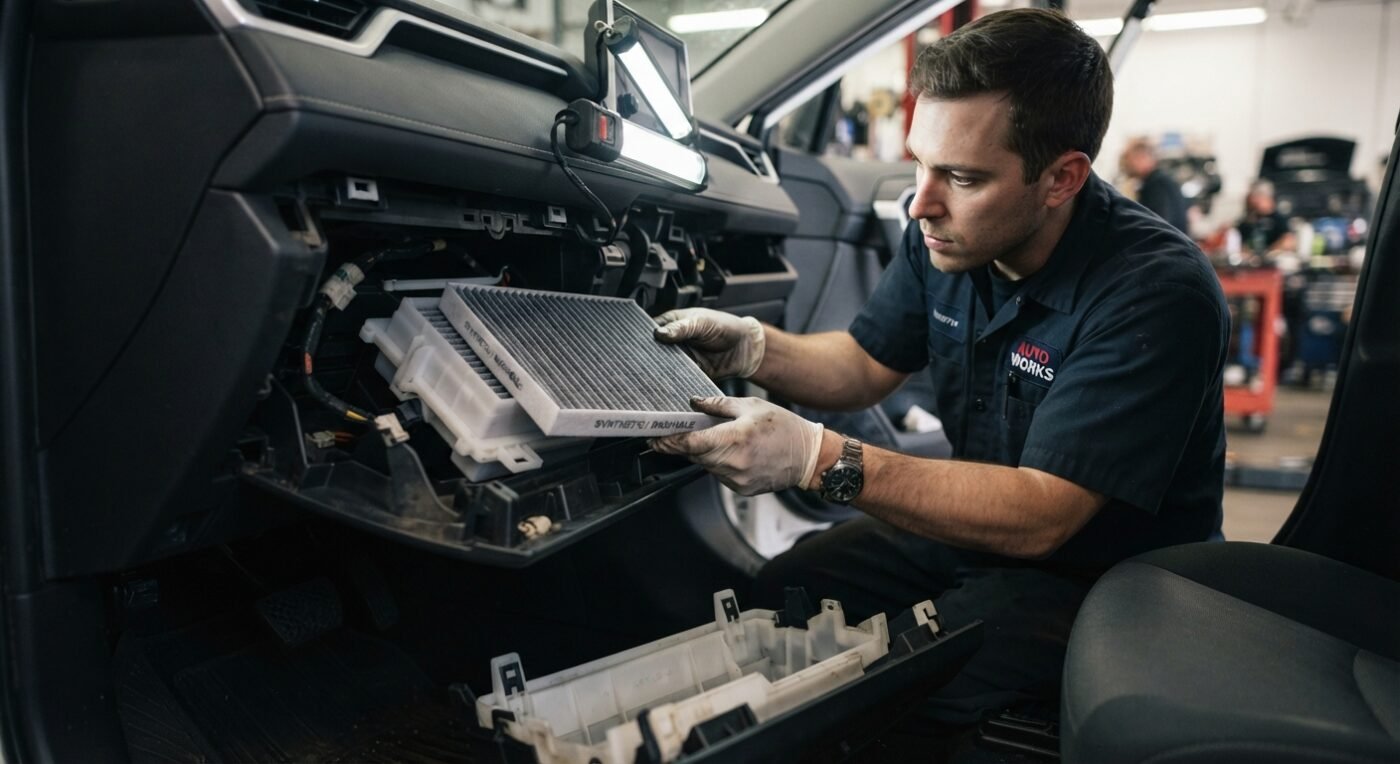
- Cabin Air Filters: Installed behind the glovebox or cowl tray. They filter dust, pollen, smog, and airborne allergens before outside air enters your heater and air conditioning vents.
Crucial Shop Rule: Never Oil a Cabin Filter
Washable cabin air filters (like the K&N VF2049 or K&N VF2053 synthetic cabin filters, priced ~$45–$55) use dry electrostatically charged synthetic fibers. Never apply filter oil to a cabin air filter. Oiling a cabin filter ruins its odor-absorbing design, clogs the synthetic material, and causes HVAC blowers to spray oily scents and residue directly into your passenger cabin.
For specific model fitments, explore our Ford F-150 cabin air filters, Ford Mustang cabin air filters, and Ford Ranger cabin air filters.
Frequently Asked Questions
Will installing a K&N air filter void my vehicle’s factory warranty?
No. Under the U.S. Magnuson-Moss Warranty Act, a manufacturer or dealer cannot void your vehicle’s warranty simply because you installed an aftermarket replacement filter, provided the filter fits properly and is kept clean.
What are the signs of a dirty standard paper air filter?
Common indicators of a clogged paper filter include sluggish throttle acceleration, a dark brown or grey bowed filter element, engine misfires at idle, or a heavy raw fuel odor upon starting due to unburned fuel in the exhaust.
How often should I wash a reusable engine air filter?
Under normal highway driving conditions, clean and re-oil a performance cotton filter every 50,000 miles. If you regularly drive on gravel, dirt roads, or in dusty construction zones, inspect the element every 10,000 to 15,000 miles and service it sooner.
