
Shocks, Bad Struts
Bad Struts Symptoms: How to Tell, What Else It Could Be, and When to Replace
Oct
Table of Contents
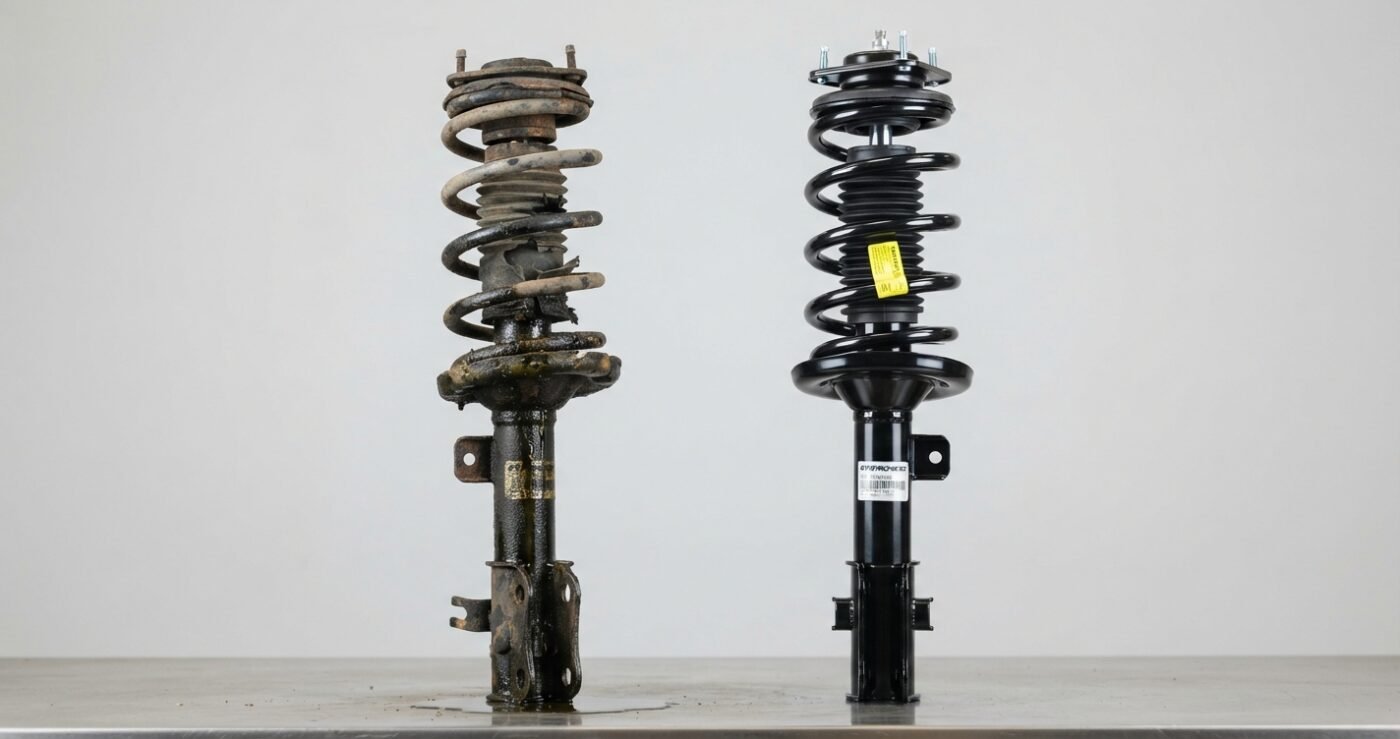
Bad struts Symptoms usually show up as fluid running down the strut body, a floaty ride that keeps bouncing after a bump, the nose diving when you brake, scalloped tire wear, or a clunk from the front end. Those are the signs. The catch is that worn mounts, bearings, bushings and sway bar links cause some of the same noises, so a clunk alone doesn’t prove the strut is dead. This guide helps you sort that out before you spend money, and it points you to the right replacement once the diagnosis holds up
Do you actually have struts?
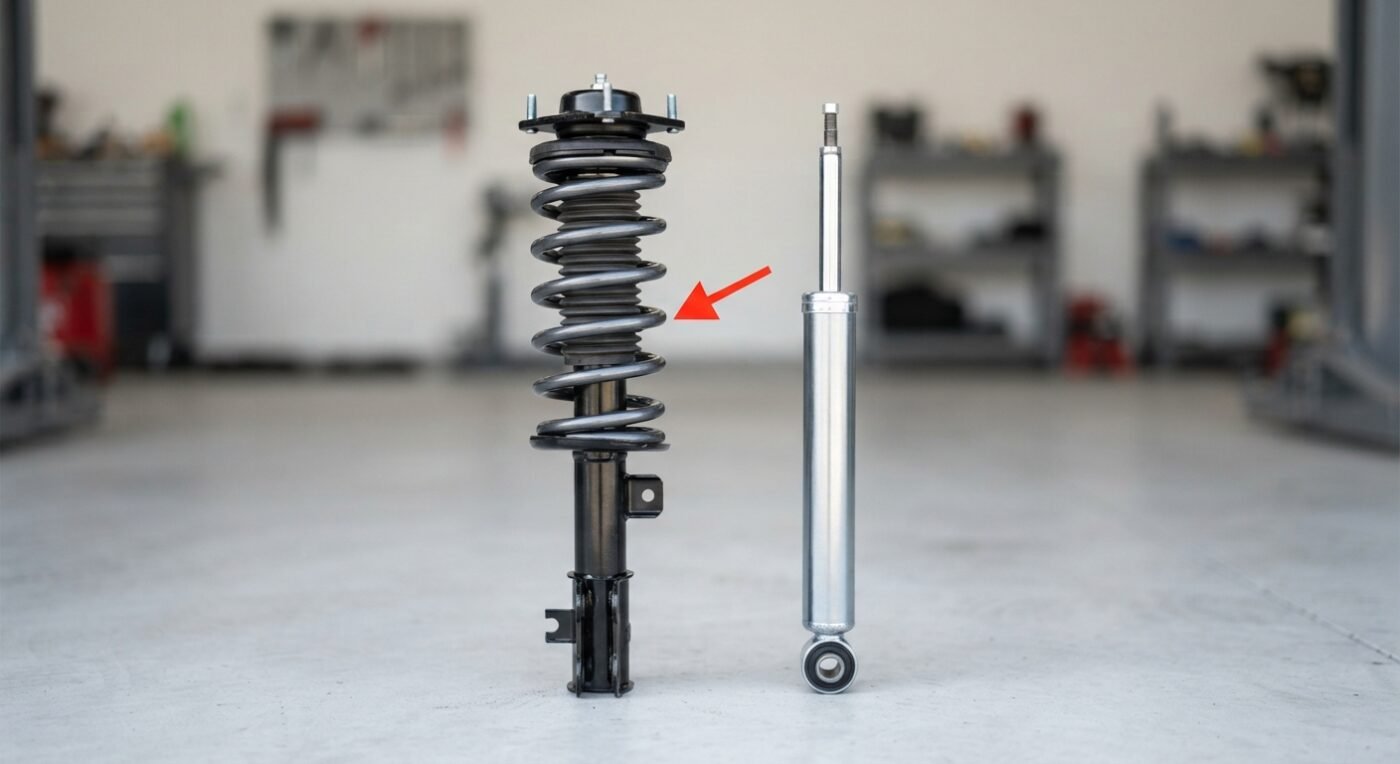
Check first, because the answer changes what you’re diagnosing. On the F-150 and Mustang, the front uses a strut-style assembly. The Rangers we stock parts for have plain shocks at both ends, so “bad struts” on a Ranger really means worn shocks. Our shock vs strut comparison guide shows how to tell them apart in a few seconds, and the symptoms below apply to both.
If you searched “squeaky struts” and meant the gas struts that hold up a hood or tailgate, that’s a different part and this isn’t the guide for it.
Bad struts Symptoms on a Ford
Here’s the symptom list with the other things that can fake each one. It’s the part most guides skip.
| What you notice | Strut cause | What else it could be | What to do |
|---|---|---|---|
| Ride stays bouncy or floaty after bumps | Worn damper isn’t controlling the spring | Tire pressure; other worn suspension parts | Check tire pressure, look for fluid, then a shop check |
| Front end dives when you brake | Worn front dampers | Brake problems | Have a shop separate the two |
| Clunk or knock over bumps | Internal damage, or the strut bottoming out | Worn mount, sway bar link, control arm bushing, ball joint | Check for play before buying |
| Squeak or pop when turning at low speed | Worn upper mount or bearing | Other worn front-end parts | Inspect the mount and bearing |
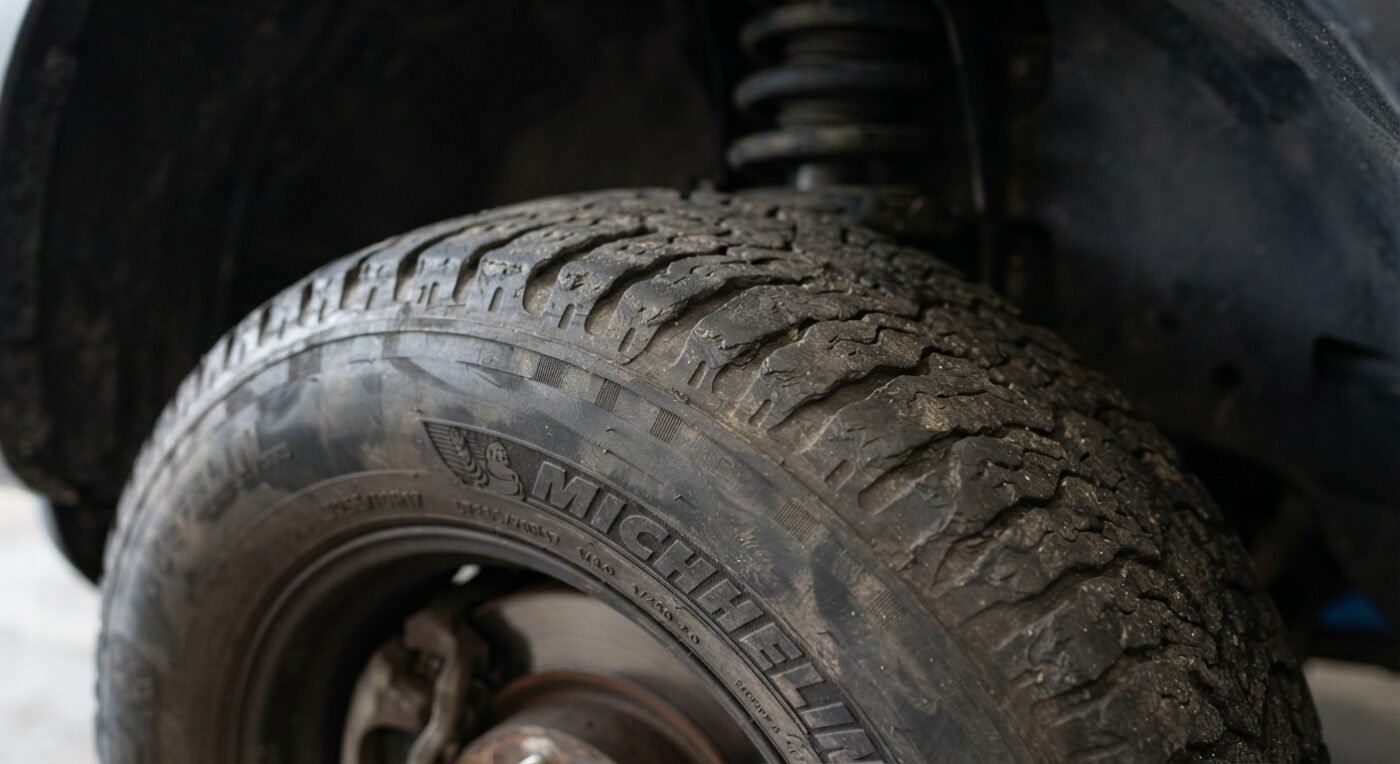
| Cupped or scalloped tire wear | Damper not keeping the tire planted | Alignment, tire pressure, worn mounts | Check alignment and tire pressure first |
| Pull to one side | Can happen when worn struts disturb alignment | Brakes, tire pressure, alignment | Look at those first |
| Fluid on the strut body | Failed seal | Normal seepage | See the leak section below |
How to tell if struts or shocks are bad
The symptoms are nearly identical, because both parts do the same damping job. The strut-specific clues are the ones tied to steering: noise when you turn the wheel, and alignment changing after wear. Rear shocks fail with the same bounce and leak signs, but you won’t get steering noise from them.
Check these first
Before you order anything, work through this in order. It costs nothing and it rules out the expensive guesses.
- Look at the strut body. Fluid, a bent or dented rod, a torn dust boot. Wipe it clean and look again after a drive, since that’s the only way to tell a fresh leak from old grime.
- Check tire pressure and wear. Inside-edge wear, cupping and scalloping all point somewhere in the suspension.
- Listen and note when. Noise over bumps points one way, noise only when turning points another.
- Check for play in the mounts. This usually means getting the front end in the air. If you do it yourself, use jack stands rated for the truck and follow your service manual. If that’s more than you want to take on, have a shop check for play. Brakes, steering and suspension are safety-critical, so a professional inspection is a reasonable step here.
Is that shock absorber leak normal?
Some oil on a strut is normal. The seal lets a very thin film past on every stroke, so even a healthy unit collects a coating over time. Dull, dusty, matte oil around the top of the body is seepage and doesn’t mean the unit is done. Wet, glossy oil that’s clearly running is a developing leak.
Carmakers give their dealers the same rule, and Mazda’s bulletins are public: seepage doesn’t need replacement, leakage does. The same bulletins note that warranty claims for plain seepage get denied.
Our own warranty terms work the same way. Both Duralast and KYB cover defects, seal blowouts and internal damping failure, but not a light oil film.
Can you drive with a leaking strut?
Technically, yes, but it isn’t a good idea. A seeping strut isn’t an emergency. A strut that’s actively leaking is losing damping, and one source recommends against driving with bad struts because control drops, especially at speed. How urgent it is depends on how bad the leak is. Get it checked soon.
Squeaky struts: what it usually means
A squeak from the front is one of the most common reasons people suspect their struts, and it’s often the wrong part. Forum owners report that lubricant sprayed on gets a quiet ride for a day or a week, then the noise returns. That’s a stopgap, not a fix.
The real causes are usually something else. We see this in our returns: customers send back new struts as defective over a squeak or a thud, and the real culprit is often a worn sway bar link, a hardened control arm bushing, or a loose upper mount bolt. None of those are in our catalog, so a new strut won’t fix them.
If the squeak happens when you turn the wheel at low speed, look at the upper mount and bearing. On our loaded strut assemblies those come with the unit.
Front end clunk when hitting bumps
A thud or clunk over rough pavement is harder to pin down than any other symptom here. The strut can cause it, but the list of suspects is long: ball joints, bushings, sway bar links and mounts. One forum thread blamed worn upper control arm bushings for a heavy thud at slow speed over speed bumps.
Narrow it down by noting when it happens. A clunk over a single bump, a thud at low speed, and a rattle over rough pavement can all point to different parts. If the strut is the cause, you’ll often see fluid or hear it when the unit bottoms out. If you can’t find fluid, rule out the cheaper parts before buying a strut.
Fleet managers: Worn dampers cut tire life, since cupping and uneven wear are the direct result, and they speed up wear on ball joints, control arm bushings, tie rod ends and end links. Put a damper check on your inspection schedule and log it per truck.
When to replace
Replace struts when the diagnosis is confirmed, not on a mileage guess. Advice online contradicts itself: one site says 80,000 to 120,000 miles, another says don’t replace at 50,000 if you have no symptoms, a third says there’s no set schedule. We won’t hand you a number we can’t back up.
Some practical points:
- Replace struts in pairs on the same axle.
- Replace the mount and bearing along with the struts. A loaded assembly includes them.
- Get an alignment after front strut replacement.
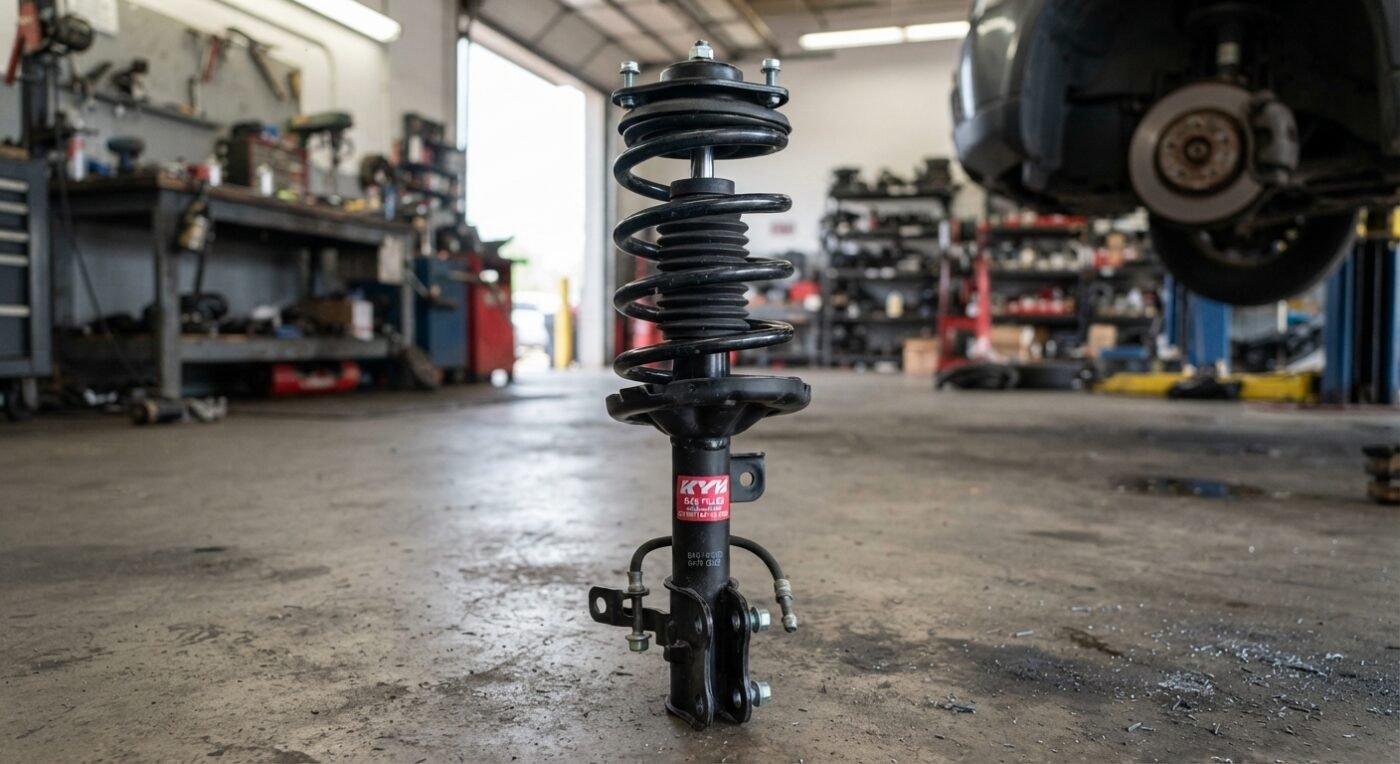
If it’s confirmed: what replaces it
| Model | Years | Position | Part | Price |
|---|---|---|---|---|
| F-150 | 2009–2013 | Front | Duralast Loaded Strut LS53-90391B | $185 |
| F-150 | 2009–2013 | Front | KYB Loaded Strut ASR4172 | $400 |
| Mustang | 2011–2014, without Performance Package | Front | Duralast Loaded Strut LS54-94961B | $205 |
| Mustang | 2012-2015 | Front | KYB Loaded Strut BSR4167 | $222 |
| Ranger | 2007-2011 | Front/rear shocks | Duralast MS34-33132B, KYB 344397, KYB 565011 | $47–$112 |
Rear shocks and the rest of the lineup are in our category pages: F-150 shocks and struts, Mustang shocks and struts and Ranger shocks and struts.
We don’t sell sway bar links, control arm bushings or standalone mounts, so if your diagnosis ends there, you’ll need those elsewhere.
Bad Struts Symptoms

Pingback: Strut Replacement Cost: Parts, Labor and DIY vs Shop - Spare Part Plug